

“It is a truth universally acknowledged, that a single man in possession of a good fortune, must be in want of a wife.”
As readers, we all know the moment when a book stops being a story and starts becoming an experience. Your eyes stop mid-page, your thumb freezes on the margin, and you find yourself rereading a single line three or four times over just to feel the weight of the words settle in.
What makes the most beautifully written sentences in literature so iconic? Great prose blends deliberate rhythmic cadence, vivid sensory imagery, syntactic precision, and deep emotional resonance. Instead of just advancing the plot, these lines compress complex human truths into musical, memorable phrasing that sticks with you long after the final chapter closes.
Today at What We Reading, we’re curating a collection of breathtaking lines spanning timeless classics and modern masterpieces. For each entry, we explore beyond the quote itself to break down the exact literary techniques – and raw human emotion – that make every sentence a work of art.
Quick Reference Table: Top Literary Sentences At A Glance
| Author | Book Title | Literary Technique | Core Theme |
| Gabriel García Márquez | One Hundred Years of Solitude | Temporal compression & framing | Memory, fate, and cyclical time |
| Daphne du Maurier | Rebecca | Dreamlike cadence & repetition | Nostalgia and haunting obsession |
| Leo Tolstoy | Anna Karenina | Aphoristic symmetry & contrast | Domesticity, happiness & conflict |
| William Gibson | Neuromancer | Sensory juxtaposition | Cyberpunk alienation and technology |
| F. Scott Fitzgerald | The Great Gatsby | Tidal rhythm & alliteration | Illusion, longing and the past |
| Toni Morrison | Beloved | Lyrical economy & repetition | Self-worth and healing from trauma |
| Kazuo Ishiguro | The Remains of the Day | Understated dramatic irony | Regret, duty, and lost time |
| James Baldwin | Giovanni’s Room | Visceral sensory precision | Love, vulnerability, and identity |
| Vladimir Nabokov | Lolita | Phonetic playfulness & tripling | Obsession and aesthetic seduction |
| Arundhati Roy | The God of Small Things | Atmospheric personification | Childhood, nature, and foreboding |
| Anthony Doerr | All the Light We Cannot See | Tactile metaphor & brevity | Resilience and unseen human connection |
| Virginia Woolf | Mrs Dalloway | Stream-of-consciousness pacing | Fleeting time and subjective consciousness |
| John Steinbeck | East of Eden | Biblical cadence & moral weight | Free will and human agency |
| Ralph Ellison | Invisible Man | Sharp metaphor & rhythmic punch | Social erasure and self-perception |
Iconic Opening Sentences That Grab You Instantly
A great first line serves as a turning fork for the whole novel. Within seconds, it sets up the narrative voice, establishes the emotional atmosphere, and signals the rules of the world you’re about to enter.
One Hundred Years of Solitude – Gabriel García Márquez
The Line: Many years later, as he faced the firing squad, Colonel Aureliano Buendía was to remember that distant afternoon when his father took him to discover ice.
In one breath, García Márquez collapses past, present, and future into one fluid timeline. Before we even understand why the colonel is facing execution, we are whisked back in time to childhood memory of wonder in the isolated town of Macondo.
Why it works: This sentence works through temporal compression. By placing a moment of imminent death alongside a memory of discovering ice, the prose instantly evokes the book’s iconic tone of magical realism – where history moves in circles, opposed to straight lines, and the miraculous is viewed as an everyday mundane thing.
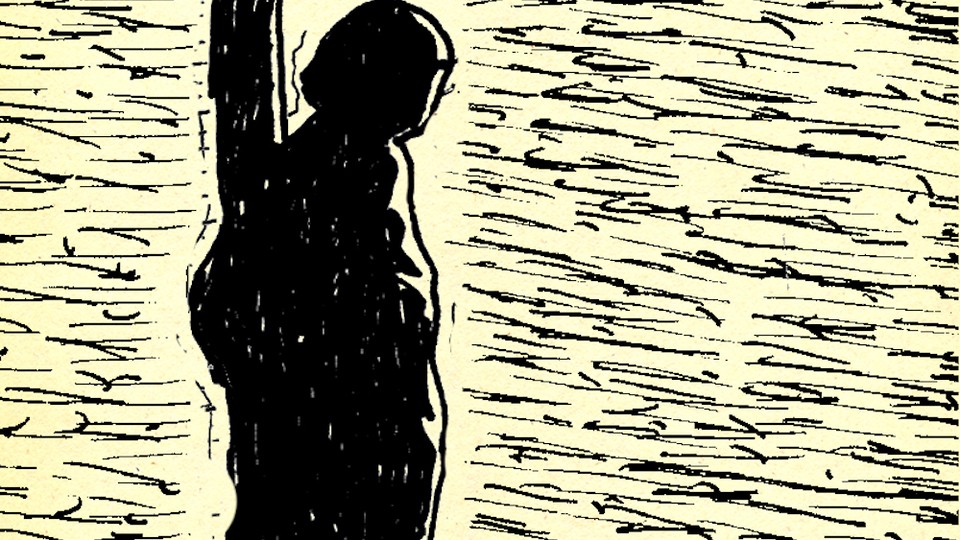
Rebecca – Daphne du Maurier
The Line: Last night I dreamt I went to Manderley again..
Du Maurier opens her iconic gothic thriller not with action, but with an eerie confession of return. Immediately, we as the audience understand that Manderley is much more than just a grand English estate; it is a psychological anchor the narrator cannot escape from.
Why it works: The power of this opening line stems from its dreamlike cadence and haunting nostalgia. Using simple, unadorned vocabulary, the sentence mimics the gentle, rhythmic pull of a recurring dream. That quiet restraint evokes an immediate sense of foreboding, allowing us readers to grasp how the past still holds power over the present.
Check Out The Best Books Like Rebecca
Anna Karenina – Leo Tolstoy
The Line: All happy families are alike; each unhappy family is unhappy in its own way..
Instead of introducing a character or setting a physical scene, Tolstoy kicks off his sprawling epic with a sweeping philosophical claim about human relationships and domestic life.
Why it works: This line endures because of its aphoristic symmetry. The balanced, two-part structure feels like an ancient proverb, lending immediate authority to the narrator’s voice. By stacking uniform contentment against the messy nature of misery, Tolstoy gives the reader an analytical lens through which to judge every marriage and betrayal to come.
Neuromancer – William Gibson
The Line: The sky above the port was the color of television, tuned to a dead channel.
Taking place in the neon-drenched underworld of Chiba City, this iconic opening line lands the audience right in the heart of a gritty, high-tech future where the natural world has been totally overtaken by synthetic decay.
Why it works: Gibson achieves instant world-building through sensory juxtaposition. Contrasting an organic sky with static television noise upends traditional nature imagery. In less than twenty words, the line signals the birth of the cyberpunk aesthetic – a world brimming with technology, stripped of natural beauty, and humming with urban alienation.
Poetic Prose On Love, Loss, And Memory
The sentences that refuse to leave us after we’ve devoured them rarely describe grand plot twists. Rather, they capture quiet, universal emotions – grief, longing, devotion, and regret – with such clarity that we feel understood across time and distance.
The Great Gatsby – F. Scott Fitzgerald
The Line: So we beat on, boats against the current, borne back ceaselessly into the past.
Nick Carraway closes his account of Jay Gatsby’s doomed pursuit of Daisy Buchanan by zooming out from Long Island Sound to reflect on human ambition, illusion, and our obsessions with recapturing the past.
Why it works: Fitzgerald absolutely nails a hypnotic, tide-like rhythm through deliberate alliteration and balanced clauses. The soft repetition of “b” sounds mimics the physical struggle of oars driving against the water, whilst the backward pull of the sentence’s second half reflects the inevitability of time hauling us from our dreams.
Check Out The Best Books Like The Great Gatsby
Beloved – Toni Morrison
The Line: You your best thing, Sethe. You are.
After years of enduring the unimaginable trauma of slavery and haunting grief, Sethe lies exhausted in bed, adamant that she has lost everything that gave her life purpose – until Paul D gently redirects her attention inward.
Why it works: The power of this moment stems from its lyrical economy. Peeling away traditional grammar rules in favour of spoken, rhythmic vernacular, Morrison serves up devastating emotional clarity in so few words. The immediate repetition at the end lands like a steady heartbeat, transforming a simple affirmation into an act of survival and reclamation.
The Remains of the Day – Kazuo Ishiguro
The Line: Perhaps, then, there is something to his advice that I should cease looking back so much, that I should adopt a more positive outlook and try to make the best of what remains of my day.
One of my all-time favourite novels wraps up on a pier at dusk where an ageing Stevens finally acknowledges the unspoken love and decades of personal sacrifice behind him. This line is his resolution to find comfort in the quiet hours at the end of a long life of service.
Why it works: Kazuo Ishiguro is a master of understated dramatic irony. On the surface, Stevens’ formal, measured phrasing sounds serene and optimistic. Beneath the surface, however, the audience can feel the heartache of a man clinging to dignity to mask profound regret – making the quiet restraint way more potent than any emotional outburst.
Check Out The Best Books Like The Remains Of The Day
Giovanni’s Room – James Baldwin
The Line: He held my face between his hands, and I suppose such tenderness has scarcely ever produced such terror as I then felt
Split between social norms and his undeniable love for Giovanni in 1950s Paris, narrator David confronts the terrifying vulnerability needed to truly love another person without hiding behind shame.
Why it works: Baldwin writes with visceral sensory precision, establishing emotional intimacy as something physical and perilous. By marrying a stripped-back, conversational syntax with stark contrasts between light and shadow or safety and exposure, he makes us readers feel the heaviness of David’s fear and longing in real time.
Vivid Imagery And Sentences That Paint A World
Some authors are able to use words like a camera lens, hauling you right into the heat, texture, and physical pulse of a setting. When sensory precision meets rhythmic syntax, one sentence can be all that’s needed to construct a whole atmosphere around the audience.
Lolita – Vladimir Nabokov
The Line: Lolita, light of my life, fire of my loins. My sin, my soul. Lo-lee-ta: the tip of the tongue taking a trip of three steps down the palate to tap, at three, on the teeth. Lo. Lee. Ta.
In the very first paragraph of the book, narrator Humbert Humbert introduces the object of his fixation by obsessing over the physical mechanics of speaking her name out loud, syllable by syllable.
Why it works: Nabokov turns pronunciation into choreography through phonetic playfulness and rhythmic tripling. The crisp alliteration of “t” sounds forces your own tongue to copy the exact three-step movement he describes down the palate to the teeth. It is a textbook example of sonic craftsmanship that instantly showcases the narrator’s theatrical, manipulative charisma.
Check Out The Best Books Like Lolita
The God of Small Things – Arundhati Roy
The Line: May in Ayemenem is a hot, brooding month.
Booker Prize winner Roy begins The God of Small Things by immersing the audience in the oppressive, pre-monsoon heat of Kerala, South India, setting up the stage for a family tragedy that unfurls against an untamed natural backdrop.
Why it works: The sentence excels at evoking lush personification and sensory overload. Instead of just stating that the weather is humid, Roy treats the month of May as a living, suffocating presence – coupling vivid colours like jackfruit yellow and moss green with overflowing clauses that reflect the heavy, inescapable weight of the air itself.
All the Light We Cannot See – Anthony Doerr
The Line: I always thought, or imagined, that there were these invisible lines trembling in our wake, outlining our trajectories through life, throbbing with electric energy.
Set amid the devastation of the Second World War, Doerr’s acclaimed bestseller follows a blind French girl and a German orphan boy whose lives intersect across occupied Europe through shortwave radio broadcasts and quiet acts of survival.
Why it works: Doerr hits cinematic clarity through tactile metaphor and brevity. Because his protagonist experiences the world without sight, his prose is all about sound, temperature, and texture – transforming something invisible, such as radio frequencies or distant artillery, into tangible, physical sensations you can almost feel yourself, even as the reader.
Check Out The Best Books Like All The Light We Cannot See
Philosophical Lines That Linger Long After The Last Page
Beyond the beauty of sound or setting, the greatest sentences in literature serve as mental anchors. They distil sprawling questions about mortality, free will, and human identity into sharp, portable truths you hold with you for years.
Mrs Dalloway – Virginia Woolf
The Line: In people’s eyes, in the swing, tramp, and trudge; in the bellow and the uproar; the carriages, motor cars, omnibuses, vans, sandwich men shuffling and swinging; brass bands; barrel organs; in the triumph and the jingle and the strange high singing of some aeroplane overhead was what she loved; life; London; this moment of June.
Walking through the bustling streets of post-war London on a bright summer morning to buy flowers for her evening party, Clarissa Dalloway experiences a sudden, overwhelming rush of gratitude for just being alive at that very moment.
Why it works: Woolf captures the texture of human thought through stream-of-consciousness pacing and strategic punctuation. By tying rapid sensory impressions with cascading clauses and semicolons, the sentence mirrors the restless, forward pulse of consciousness itself – making a fleeting second feel both fragile and infinite at the same time.
East of Eden – John Steinbeck
The Line: But the Hebrew word, the word timshel—‘Thou mayest’—that gives a choice.
Gathered around a table in California’s Salinas Valley, the scholar Lee reveals the results of a decade-long translation study, unpacking the single Hebrew word that changes the whole moral meaning of the Cain and Abel story.
Why it works: The line carries huge force through its biblical cadence and moral weight. By contrasting absolute fate (“thou shalt”) with open-ended agency (“thou mayest”), Steinbeck upgrades a linguistic distinction into a profound declaration of human freedom – reminding us that our past never prevents us from choosing who we become.
Invisible Man – Ralph Ellison
The Line: I am an invisible man.
Speaking straight to the audience from his brightly-lit basement sanctuary in Harlem, Ellison’s unnamed narrator begins his story by clarifying that his invisibility has nothing to do with science or any supernatural tricks.
Why it works: Ellison delivers a knockout blow through sharp metaphor and rhythmic punch. Setting up a playful, almost literal expectation before moving to a scathing sociological truth, the sentence exposes how prejudice warps human perception – forcing the audience to grapple with the space between who someone really is and what society opts to see.
What Makes A Sentence “Beautiful”?
A sentence goes beyond ordinary communication when its grammatical structure reflects its deeper emotional context. Instead of just delivering plot points, great prose evokes a physical and psychological response in the audience through three core mechanics:
- Cadence and Musical Rhythm: Memorable sentences depend on deliberate syllable stress, alliteration, and punctuation. Strategic semicolons, parallel clauses, or sudden jumps from long, flowing phrases to a blunt three-word ending create a vocal rhythm that feels natural when read out loud.
- Defamiliarisation: First termed by theorist Viktor Shklovsky, defamiliarisation forces the audience to slow down. Rather than leaning on tired clichés, a savvy writer compares an evening sky to static TV noise, or frames grief as a physical weight, flipping how you view the world.
- Emotional Compression: The best literary works pack a whole character arc, moral philosophy, or lifetime of regret into less than thirty words. By choosing concrete verbs and precise nouns over heavy adjectives, the writer leaves room for the reader’s own imagination to fill in the emotional echoes.
Ultimately, beauty in writing is never just for decoration. When form and feeling sync up, a single line stops feeling like ink on a page and starts feeling like a lived truth.
FAQs
What is Considered the Most Famous Sentence in Fiction?
Jane Austen’s opening line in Pride and Prejudice – about a single man in possession of a good fortune wanting a wife – is often considered the most famous line in English literature. Some other honourable mentions include the opening lines in Herman Melville’s Moby-Dick, Charles Dickens’ A Tale of Two Cities, and Leo Tolstoy’s Anna Karenina.
Why do Some Literary Sentences Stick in Our Minds?
Sentences stay with us because rhythm, alliteration, and vivid imagery all activate the brain’s auditory and visual processing centres simultaneously. When a line couples a musical pattern with strong emotional truth, it triggers what cognitive psychologists call the phonological loop, making the phrasing as easy to remember as a musical lyric.
How Can Writers Craft More Lyrical Sentences?
Writers can write stronger, more evocative sentences by rereading their drafts aloud to catch any clunky rhythms, varying sentence lengths to create contrast, and replacing weak adverbs with precise verbs. Cutting unnecessary filler words and grounding abstract emotions in concrete physical imagery can also be a game-changer for transforming flat exposition into memorable prose.
Check Out Our Guide On How To Fix Flat Writing On Our Sister Site, What We Writing
Wrap Up
At its heart, a truly memorable sentence does more than wow us with clever vocabulary – it bridges the gap between two minds. Whether through the tidal pull of Fitzgerald’s prose or the quiet restraint found in Ishiguro’s stories, great lines stick because they give clear, musical shape to feelings we thought we were the only ones who got to experience them.
Now over to you: Which single sentence from a book have you underlined, dog-eared, or memorised over the years? Drop your favourite line – and the novel it comes from – in the comments below!
Check Out The Most Beautiful Books Ever Written

Part-time reader, part-time rambler, and full-time Horror enthusiast, James has been writing for What We Reading since 2022. His earliest reading memories involved Historical Fiction, Fantasy and Horror tales, which he has continued to take with him to this day. James’ favourite books include The Last (Hanna Jameson), The Troop (Nick Cutter) and Chasing The Boogeyman (Richard Chizmar).

